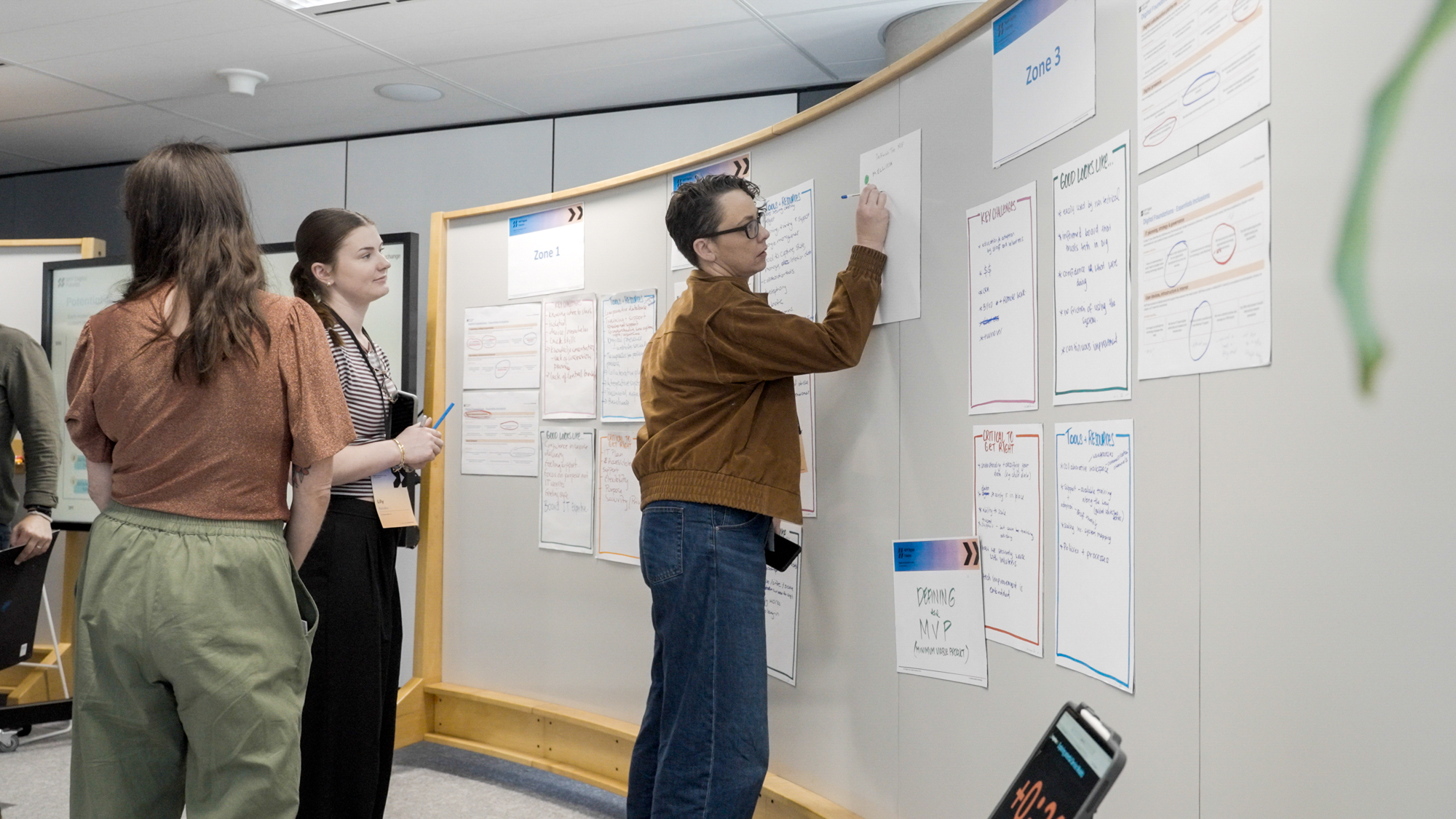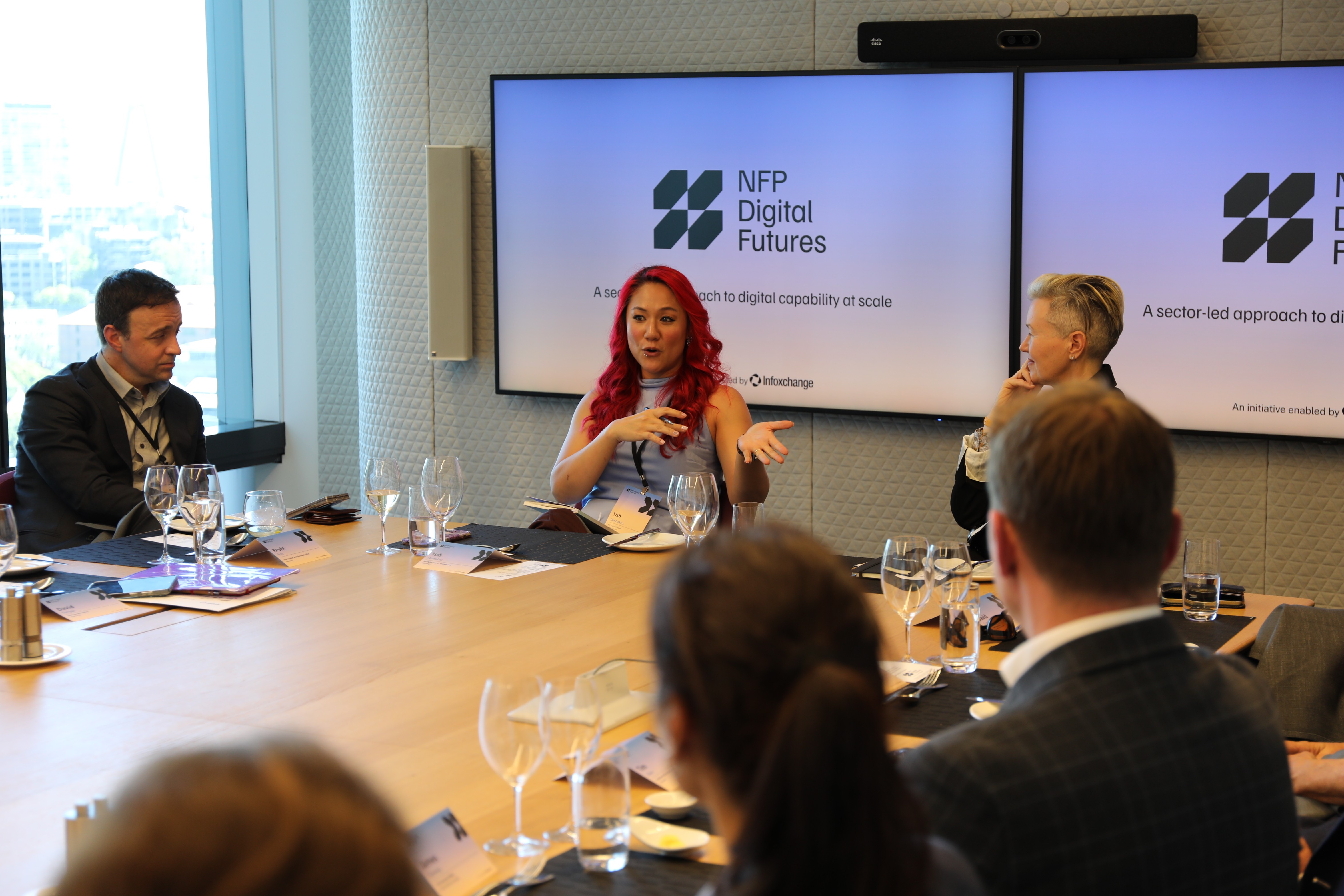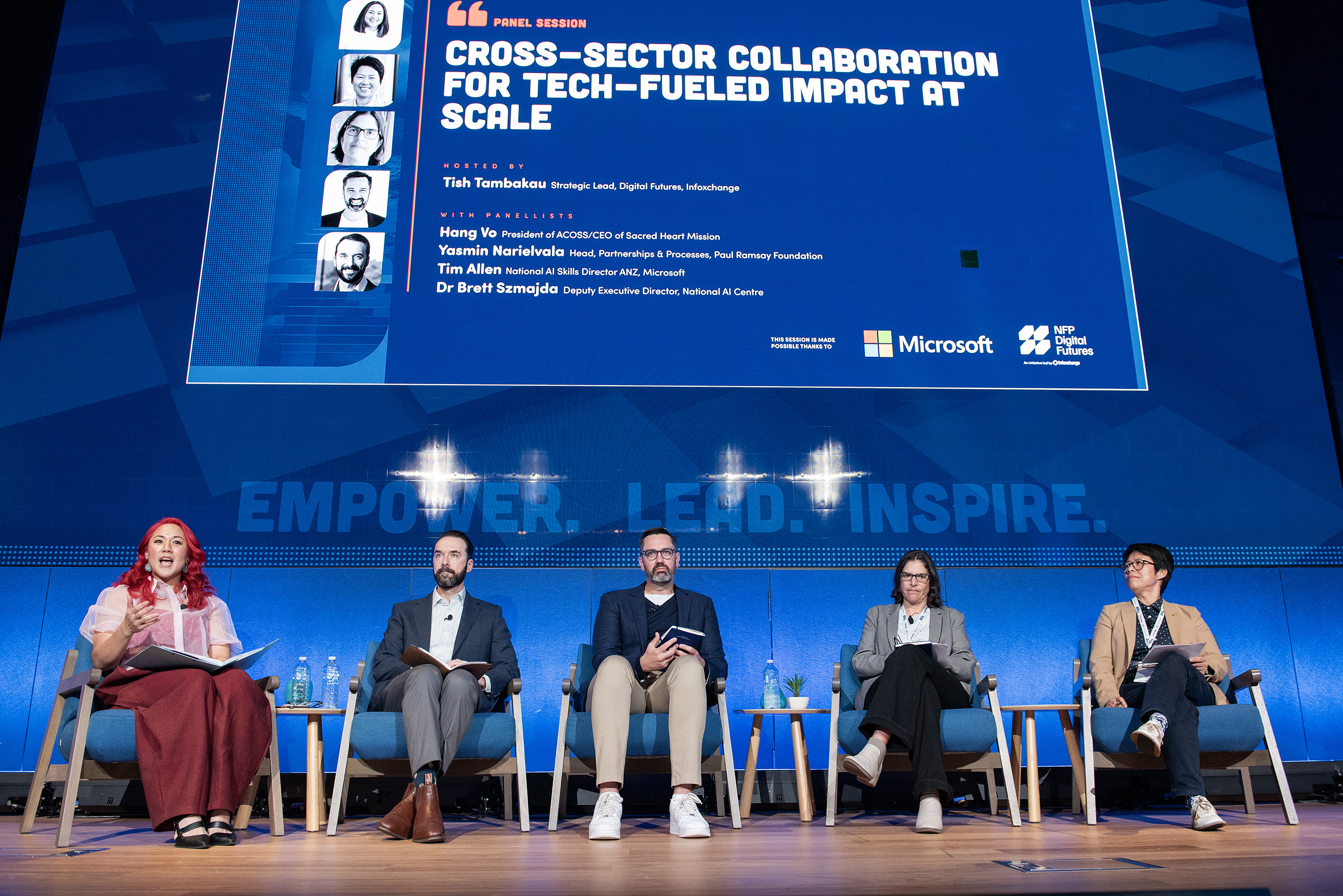
With more than 1,200 delegates coming together at this year's Philanthropy Australia Conference, the event provided an important opportunity to engage Australia's philanthropic community in shaping thedigital future of the not-for-profit (NFP) sector.
In opening the conference, Philanthropy Australia CEO Maree Sidey spoke about the importance of connection and belonging, and theopportunity for philanthropy to actively build, fund and foster theseconditions across our communities, networks and institutions.
It was a message that resonated strongly with the ambitionof NFP Digital Futures: bringing people and organisations together around ashared challenge that no single organisation can solve alone.
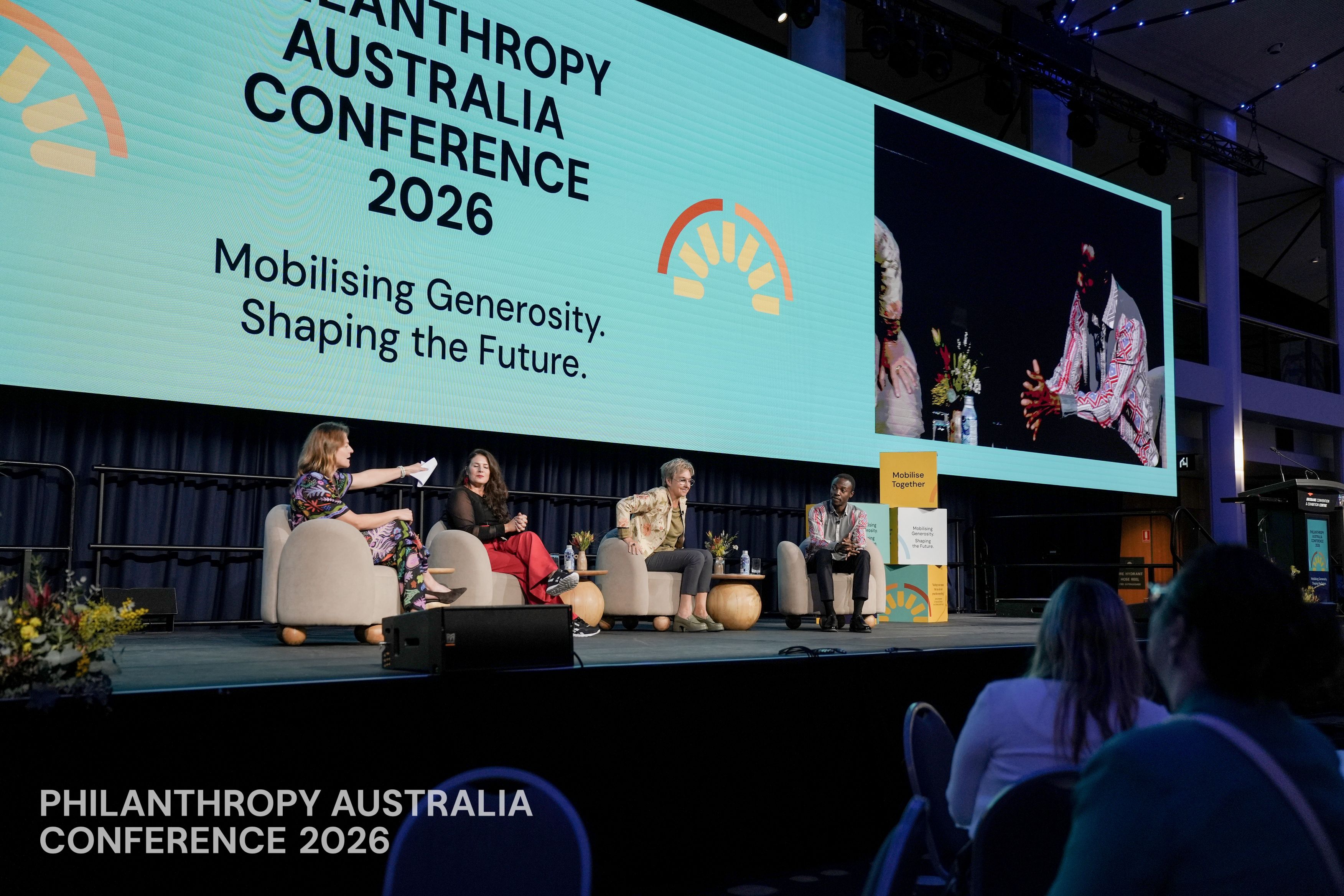
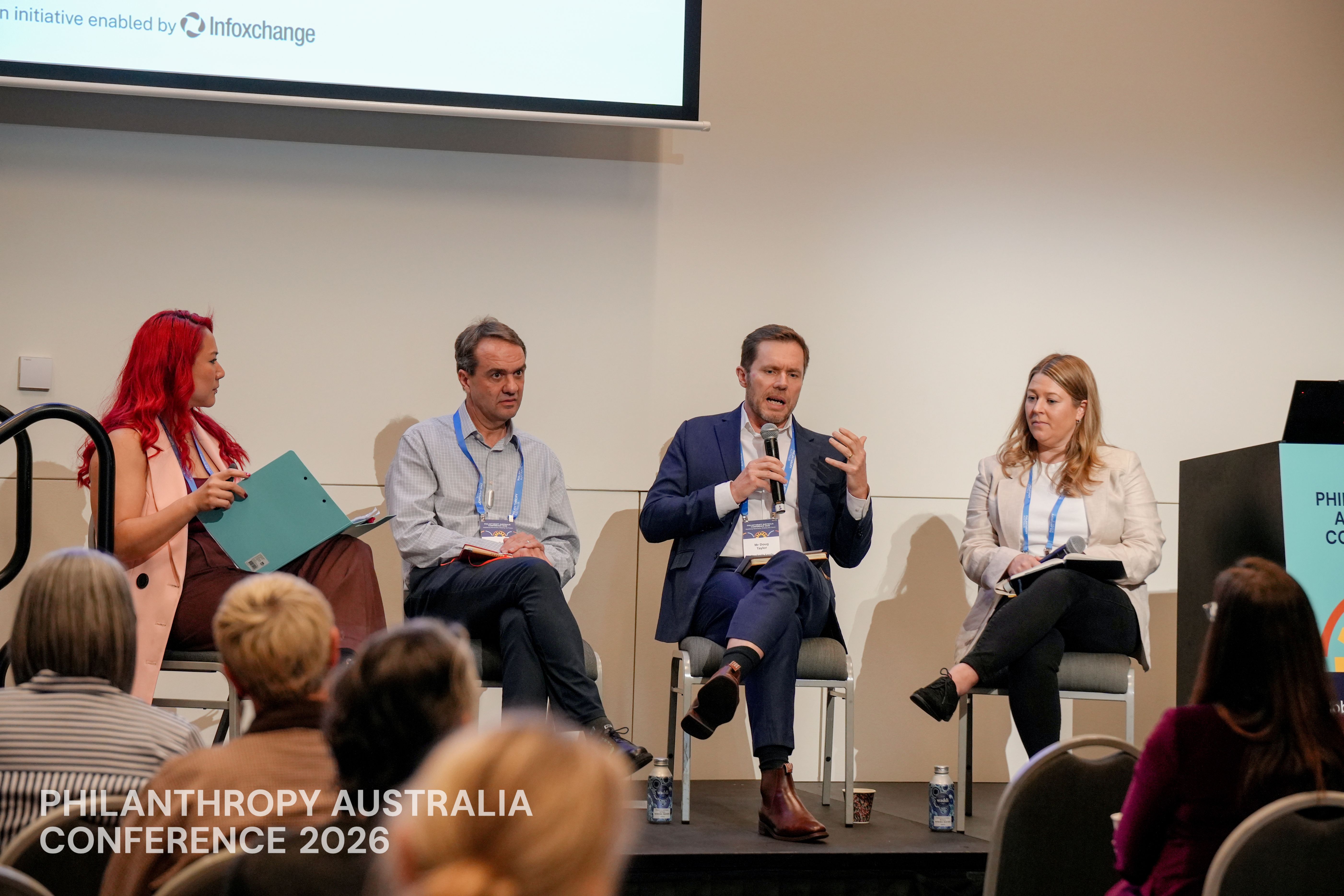
On 9 September, NFP Digital Futures hosted a panel discussion moderated by Tish Tambakau, Strategic Lead of NFP Digital Futures,bringing together:
- Doug Taylor, CEO, The Smith Family
- Tess Stone, Senior Associate, Capital for Impact, Paul Ramsay Foundation
- David Spriggs, CEO, Infoxchange
Drawing on perspectives from service delivery, philanthropy and technology, the conversation explored the urgency of digital transformation, the opportunities and risks presented by AI, and what it will take to build lasting digital capability across the sector.
Digital capability is no longer optional
Against a backdrop of rising community demand, increasing operational costs and constrained resources, NFPs are being asked to do more with less.
Digital technology presents a significant opportunity to address these pressures — not only by improving operational efficiency, but by enabling organisations to deliver more effective, accessible and responsive services.
Doug Taylor shared examples of how The Smith Family is exploring AI to streamline administrative processes, personalise experiences for families and better support frontline staff.
David Spriggs highlighted how emerging technologies are already helping caseworkers reduce administrative workloads and create moretime to support people experiencing disadvantage.
Importantly, the discussion reinforced that technology adoption should start with the problem an organisation is trying to solve,rather than the technology itself.
The opportunity is not simply to do things faster, but to create greater capacity for the work that matters most.
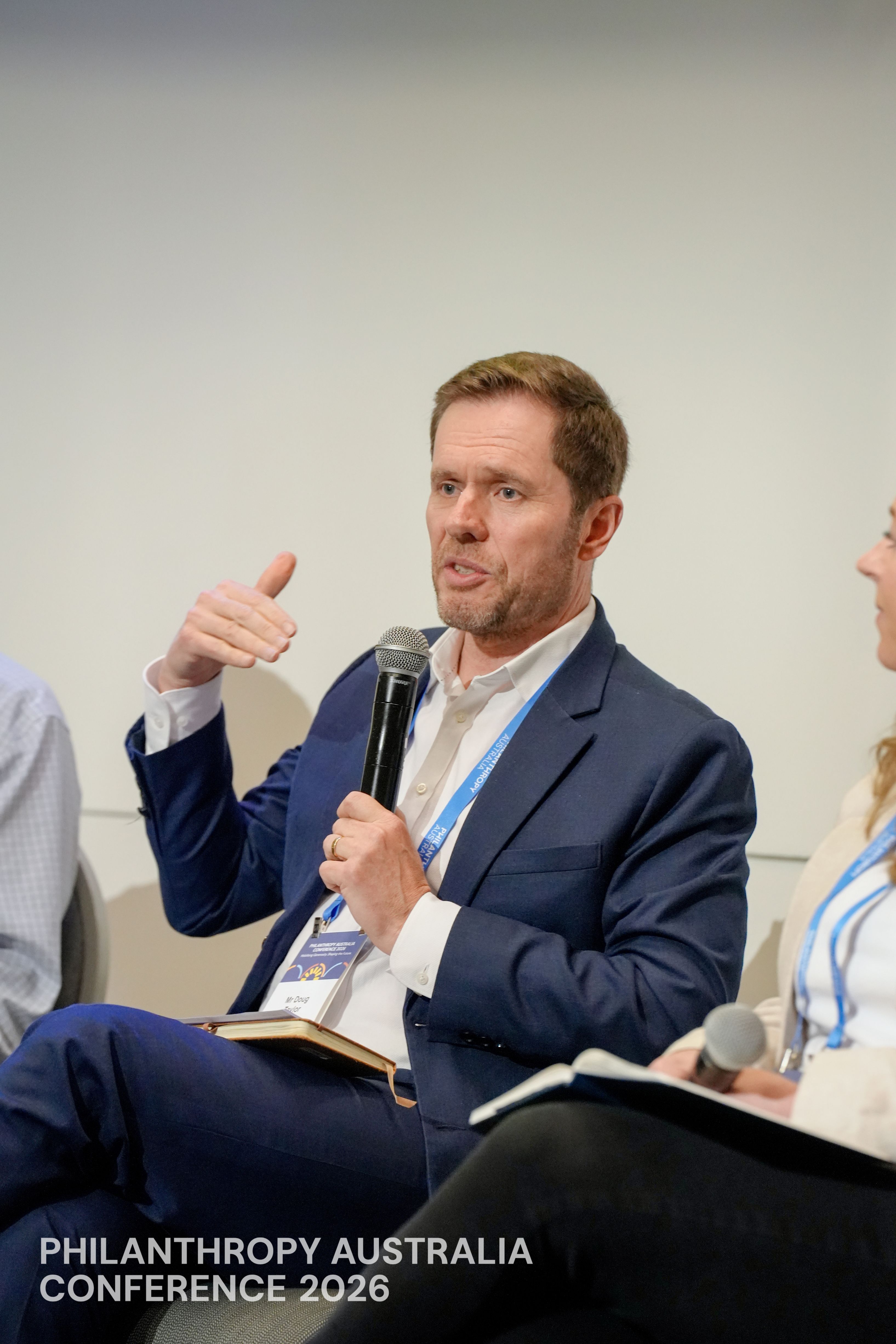
Strong foundations before innovation
While AI featured prominently in the discussion, the panel emphasised that successful and responsible adoption depends on getting the fundamentals right.
Quality data, secure systems, effective governance and digitally confident people are the foundations upon which meaningful innovation can be built.
Without these foundations, emerging technologies risk widening existing capability gaps, particularly for smaller and under-resourced organisations.
The conversation also extended beyond organisational capability to the sector's broader responsibility in shaping an inclusive and ethical digital future.
Catherine Brown, Infoxchange Board member and former CEO of Lord Mayor's Charitable Foundation, challenged the sector to take a leadership role in addressing the negative societal impacts of technology, including divisive algorithms and the need for more inclusive technology design.
For the NFP sector, digital transformation is as much about trust, safety and equity as it is about efficiency and innovation.
Moving from fragmented investment to collective action
Many of the digital challenges facing NFPs are shared across organisations. Yet historically, organisations have been left to address these challenges independently, often with limited resources and through short-term funding arrangements.
This creates duplication, uneven access to expertise andmissed opportunities to scale what works.
Tess Stone highlighted the opportunity for philanthropy to move beyond fragmented, short-term interventions and support coordinated,sector-led approaches that can achieve longer-term impact.
Through collective action, organisations can pool expertise,share learning, manage risks together and develop solutions that benefit the wider sector.
However, meaningful collaboration requires more than a shared ambition. It requires time, trust, resources, strong governance and a willingness to adapt as new insights emerge.
This is the approach underpinning NFP Digital Futures —bringing together the not-for-profit sector, philanthropy, government and the technology industry to build shared capability and address systemic challenges at scale.
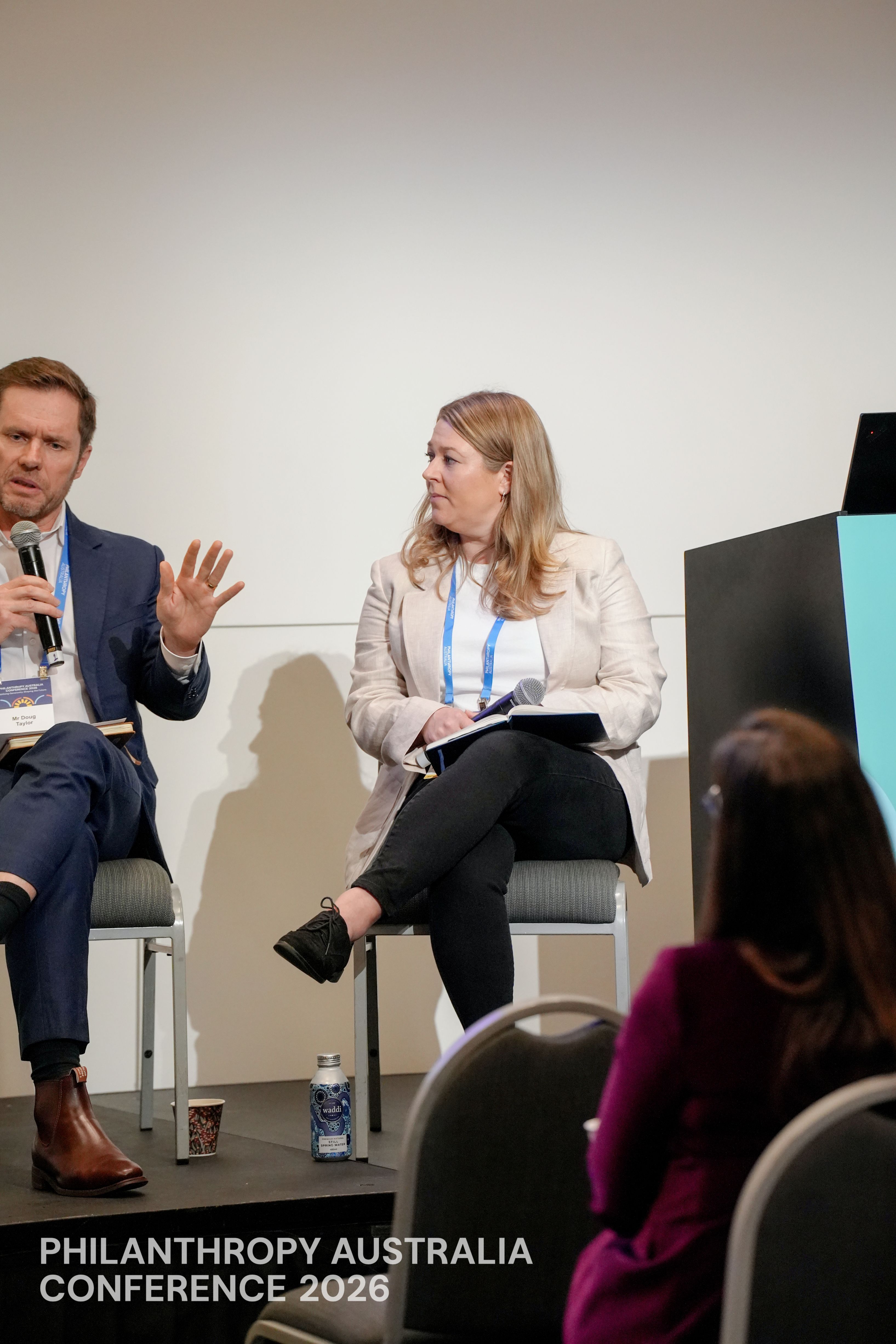
Rethinking how we fund digital capability
A central theme of the discussion was the need to evolve how digital capability is funded.
Too often, technology infrastructure, cybersecurity, staff training and digital governance are treated as administrative overheads rather than essential enablers of social impact.
The panel explored two important principles forphilanthropic investment:
Pay what it takes. Recognising the true cost ofdelivering impact, including the digital infrastructure, people, leadership and organisational capabilities that make effective service delivery possible.
Patient risk capital. Providing longer-term, flexible investment that allows organisations and collective initiatives to experiment, learn, adapt and build evidence over time.
Building lasting digital capability cannot be achieved through one-off technology purchases or isolated innovation grants. It requires sustained investment in the conditions that allow organisations to adopt, manage and evolve their use of technology confidently and responsibly.
Philanthropy has a unique opportunity to catalyse this shift— investing not only in individual organisations and programs, but in the shared capabilities and infrastructure that strengthen the sector as a whole.
Building momentum for a shared digital future
The conference provided an encouraging opportunity to build new relationships, deepen existing partnerships and engage the philanthropiccommunity in the ambitions of NFP Digital Futures.
During one of the conference plenary sessions, Dr KyleTurner, a leader in First Nations AI, called on the philanthropic community to contribute towards NFP Digital Futures' $50 million funding goal — reinforcingthe importance of collective investment in the sector's digital future.
The conversations throughout the conference highlighted agrowing recognition that digital capability is fundamental to the futureresilience, effectiveness and impact of Australia's not-for-profit sector.
Our ambition is to ensure that every NFP, regardless of its size, resources or starting point, has the capability and confidence to harness technology for greater social impact.
Achieving this will require us to think beyond individual organisations, funding cycles and technology solutions, and invest in what we can achieve together.
When we invest in the digital capability of the sector, we invest in its capacity to deliver lasting social change.